

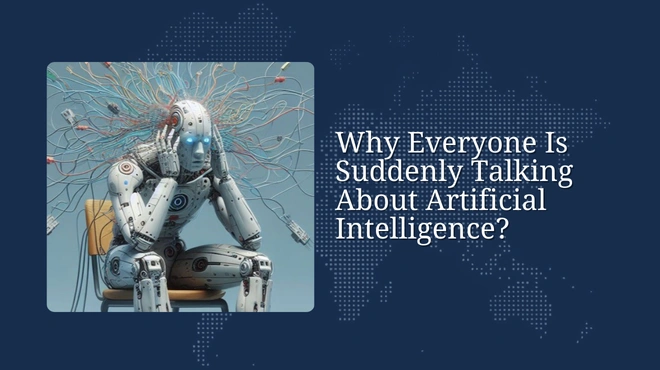
The way experts talk about artificial intelligence has changed dramatically in 2026. What was once described as a simple tool for automation is now being redefined as a powerful ecosystem shaping business, education, creativity, and decision-making. Many researchers, developers, and industry leaders are “rewriting” their understanding of AI because real-world usage has revealed both unexpected capabilities and serious limitations that were not clear in earlier years. As AI systems become more advanced, the focus has shifted from hype to deeper questions about trust, control, ethics, and long-term impact.
The Shift in How AI Is Being Understood
AI Is No Longer Seen as Just a Tool
Artificial intelligence is now viewed as more than software that completes tasks. Experts in 2026 increasingly describe AI as a decision-support partner that influences workflows, communication, and even strategic planning. This shift is forcing companies to rethink how AI fits into daily operations rather than treating it as an optional add-on. The change in mindset is one of the biggest reasons experts are rewriting their previous assumptions about AI.
Real-World Limitations Are Becoming Clear
As AI systems are used at scale, limitations such as bias, hallucinations, and inconsistent reasoning have become more visible. These issues are not just technical problems but also affect trust and reliability in critical fields like healthcare, finance, and education. Experts are now updating their frameworks to reflect these real-world challenges instead of relying on theoretical performance expectations.
Human-AI Collaboration Is Replacing Automation Thinking
Earlier discussions focused heavily on automation and replacing human work. In 2026, the focus has shifted toward collaboration. AI is increasingly seen as a support system that enhances human decision-making rather than replacing it. This change is leading experts to rewrite how productivity, creativity, and intelligence are defined in AI-driven environments.
Why AI Models Are Forcing Experts to Rethink Everything
Rapid Model Evolution Is Changing Expectations
AI models are improving at a speed that makes previous benchmarks outdated quickly. What was considered advanced last year is now standard. This rapid evolution forces experts to continuously revise their understanding of performance, capability, and limitations. As a result, older research papers and assumptions are becoming less relevant in real-time applications.
General Intelligence Features Are Emerging
Modern AI systems are showing early signs of generalized reasoning across multiple domains. This is pushing experts to rethink traditional boundaries between narrow AI and general intelligence. Even though full artificial general intelligence is not yet achieved, the blending of capabilities is strong enough to challenge existing definitions and frameworks.
Training Data and Context Are Becoming Critical Issues
Experts are now focusing more on how AI systems are trained and how context influences outputs. It is becoming clear that data quality and contextual understanding are just as important as model size. This realization is leading to rewritten strategies in AI development, especially around transparency and data governance.
The New Concerns Driving AI Rewriting in 2026
Ethics and Responsibility Are Now Central
Ethical concerns have moved from theory to urgent practice. Issues like misinformation, deepfakes, and decision accountability are forcing experts to redesign ethical guidelines for AI systems. Companies are now required to think not just about what AI can do, but what it should do in sensitive environments.
AI Regulation Is Expanding Globally
Governments around the world are introducing new AI regulations that directly impact how systems are built and deployed. Experts are rewriting frameworks to comply with legal standards related to privacy, transparency, and safety. This regulatory pressure is reshaping how AI research and development are conducted.
Trust and Transparency Are Becoming Non-Negotiable
Users are demanding more transparency in how AI systems make decisions. As a result, experts are focusing on explainable AI models that can clearly justify outputs. Without trust, even the most powerful AI systems lose value, making transparency a core requirement in modern AI design.
How AI Is Reshaping Business and Digital Strategy
Businesses Are Rebuilding Their AI Strategies
Companies are no longer using AI as a separate department tool. Instead, they are integrating it into core business strategy. From marketing to operations, AI is influencing every layer of decision-making. This integration is forcing experts to rewrite how digital transformation is defined in modern enterprises.
Content Creation and SEO Are Being Redefined
AI is significantly changing how content is created, optimized, and distributed. SEO strategies are evolving as search engines adapt to AI-generated content. Experts are now revising traditional SEO rules to include AI-assisted content quality, user intent understanding, and semantic optimization.
Workforce Skills Are Rapidly Changing
The demand for AI-related skills is reshaping job markets. Employees are now expected to understand AI tools, prompt engineering, and data interpretation. Experts are rewriting workforce development strategies to match this new skill-driven economy.
FAQs
Why are experts rewriting everything about AI in 2026?
Because AI capabilities, limitations, and real-world applications have changed significantly, requiring updated frameworks and understanding.
Is AI replacing human jobs completely?
No, AI is mainly supporting humans and improving productivity rather than fully replacing jobs.
What is the biggest change in AI thinking today?
The shift from viewing AI as a tool to seeing it as a collaborative system is the biggest change.
Are AI systems fully reliable now?
Not completely. Issues like bias and inaccuracies still exist, so human oversight is still important.
How is AI affecting businesses in 2026?
AI is deeply integrated into business strategy, operations, content creation, and decision-making processes.
Conclusion
In 2026, experts are rewriting everything about AI because the technology has moved beyond expectations and entered real-world complexity. The shift from automation to collaboration, the rise of ethical concerns, and the rapid evolution of AI models are all reshaping how AI is understood and used. As industries adapt, one thing is clear: AI is no longer just a technological trend—it is a foundational force redefining how the world works.