

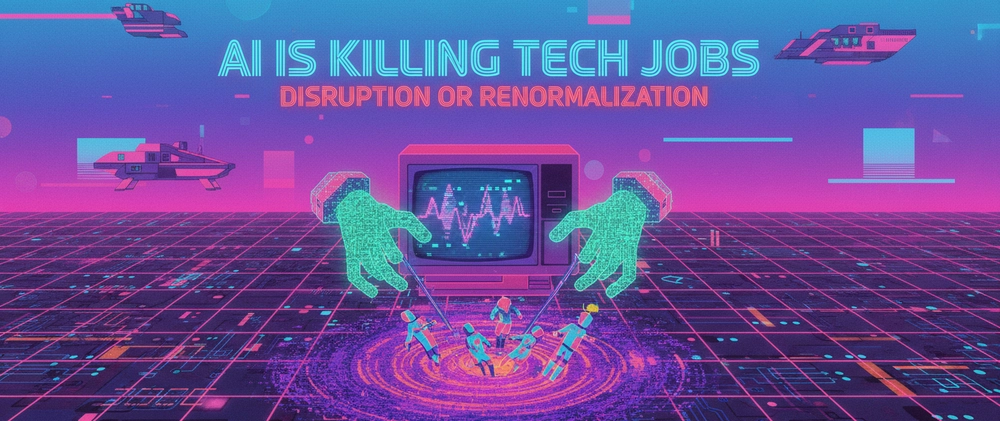
The tech world is experiencing a silent shift that many people are only starting to notice. While headlines often focus on flashy product launches and big announcements, a quiet AI update is gradually reshaping how companies build software, deliver services, and compete in the global market. This change is not loud, but its impact is deep, influencing everything from cloud computing to startups and enterprise systems. As artificial intelligence becomes more integrated into everyday tools, the balance of power in the tech industry is beginning to shift in unexpected ways.
The Rise of Silent AI Transformation in Tech
AI integration inside existing platforms
A major part of this quiet disruption is the integration of AI into platforms people already use daily. Instead of launching new standalone tools, companies are embedding AI into search engines, productivity apps, and cloud services. This makes the update feel almost invisible, yet it significantly improves automation, decision-making, and user experience. Businesses now rely on AI-driven systems without even realizing how deeply these tools are influencing operations and efficiency.
Shift from traditional software to AI-powered systems
Traditional software models are being replaced by adaptive AI-powered systems that learn and improve over time. Unlike static programs, these systems evolve based on user behavior and data inputs, making them more efficient and personalized. This shift is forcing tech companies to rethink how they design products, moving away from manual updates toward continuous AI optimization that operates in the background.
Increasing dependency on machine learning infrastructure
Machine learning infrastructure has become the backbone of modern tech ecosystems. Companies are investing heavily in scalable AI models that can process large datasets in real time. This dependency is creating a new standard where businesses without AI capabilities risk falling behind. As a result, even smaller companies are adopting machine learning tools to stay competitive in a rapidly evolving digital environment.
How This AI Update Is Changing the Tech Market
Impact on startup innovation and competition
Startups are both benefiting and struggling due to this AI shift. On one hand, AI tools lower the barrier to entry by providing automation, analytics, and development support. On the other hand, competition has intensified because larger companies also have access to the same advanced AI systems. This creates a market where innovation must happen faster, or companies risk becoming irrelevant.
Pressure on legacy tech companies
Older tech companies are facing significant pressure to modernize their systems. Many legacy platforms were not built for AI-first environments, making integration complex and costly. As AI becomes central to digital transformation, these companies must either adapt quickly or lose market share to more agile competitors that are already AI-native.
Changes in global tech investment patterns
Investors are now prioritizing AI-driven businesses over traditional software models. Funding is increasingly directed toward companies that demonstrate strong AI capabilities, automation potential, and scalable data systems. This shift in investment patterns is reshaping the global tech economy, pushing capital toward innovation-heavy sectors and away from outdated business models.
Future Implications of the Quiet AI Revolution
Evolution of job roles in the tech industry
The rise of AI is transforming job roles across the tech industry. Routine tasks are being automated, while demand for AI specialists, data engineers, and machine learning experts continues to grow. This evolution is not eliminating jobs entirely but reshaping them, requiring workers to adapt and learn new technical and analytical skills.
Expansion of AI-driven business models
Businesses are increasingly adopting AI-driven models that rely on automation, predictive analytics, and real-time decision-making. These models allow companies to scale faster while reducing operational costs. As AI becomes more advanced, we can expect fully automated systems to handle large portions of business operations with minimal human intervention.
Growing importance of ethical AI development
As AI becomes more powerful, ethical concerns are gaining attention. Issues like data privacy, algorithmic bias, and transparency are becoming critical in shaping regulations and public trust. Companies that prioritize ethical AI development are more likely to build long-term credibility and avoid regulatory challenges in the future tech landscape.
FAQs
1. What is the quiet AI update in the tech market?
It refers to the gradual integration of AI into existing systems that is transforming the tech industry without major public announcements.
2. Why is AI disrupting the tech industry?
Because it automates processes, improves efficiency, and changes how software and services are developed and delivered.
3. How does AI affect startups?
It helps startups scale faster but also increases competition with larger companies using similar AI tools.
4. Are traditional tech companies at risk?
Yes, companies that fail to adapt to AI-first systems may lose relevance in the evolving market.
5. What skills are important in the AI-driven future?
Skills like machine learning, data analysis, AI development, and digital strategy are becoming highly valuable.
Conclusion
The quiet AI update reshaping the tech market is not a single event but an ongoing transformation that is changing how the entire industry operates. From startups to global corporations, every part of the tech ecosystem is being influenced by AI-driven systems and automation. As this shift continues, companies that adapt quickly will thrive, while those that ignore it risk falling behind. The future of technology is becoming increasingly intelligent, automated, and data-driven, marking a new era of innovation that is already underway.